Knowledge
Fresh blueberries from China (not frozen): Yunnan exporter, season and import checks
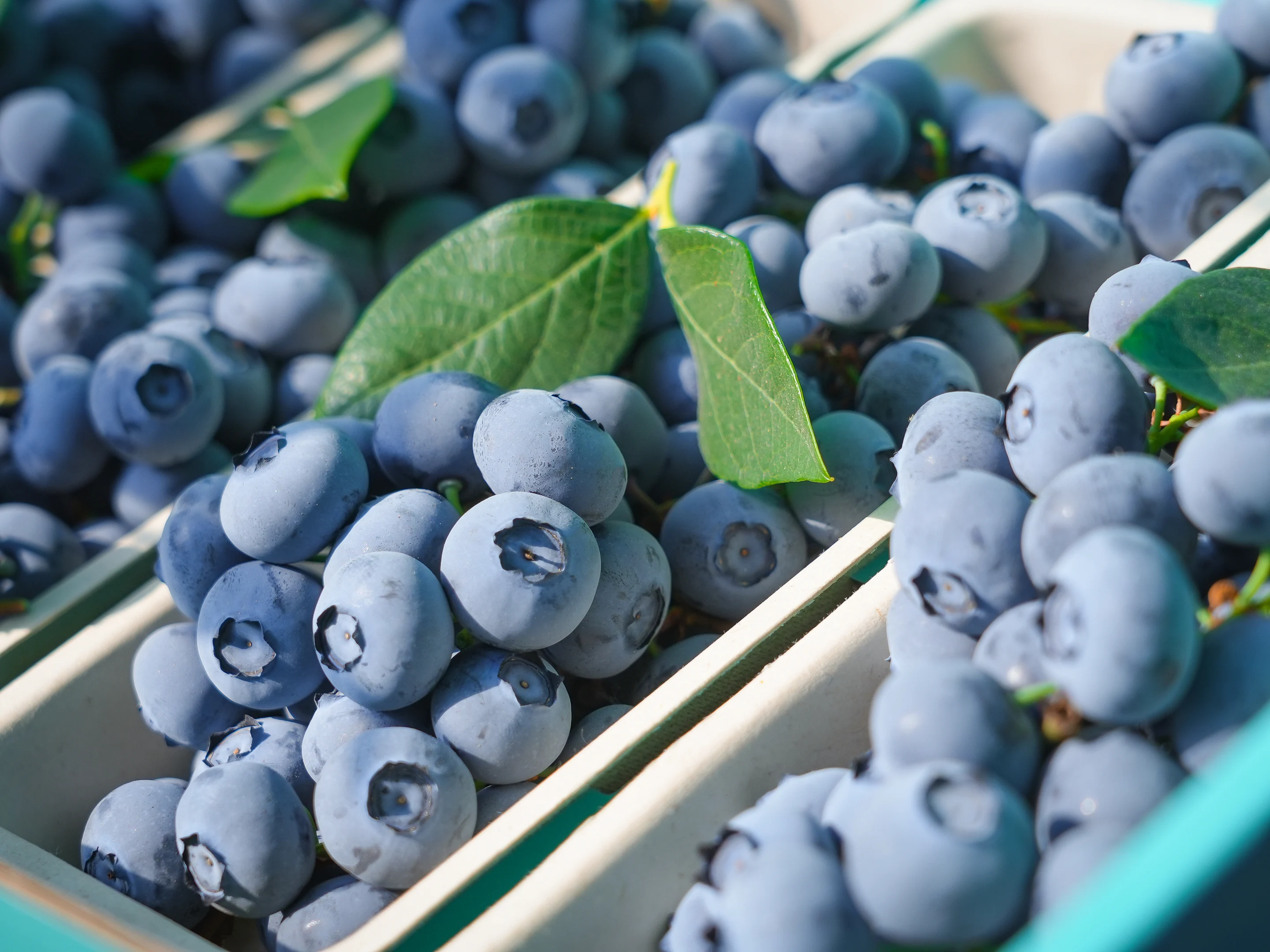
This page is about fresh blueberries from China, not IQF or freeze-dried fruit. Cunjindi’s blueberry line is sourced from Yunnan, with a December to May reference window and most volume from January to April. Below: how fresh differs from frozen, what Chinese export data show, and what to confirm before you order.
Which product are you buying?
Search results for “China blueberry exporter” mix three products: fresh berries, individually quick frozen (IQF) berries and freeze-dried berries. They travel differently, sell differently and are declared under different customs lines. Ask every supplier which one the quotation is for before you compare anything else.
Fresh blueberries are packed in punnets and cartons, kept cold from the packhouse to the shelf, and sold within days or weeks. Frozen berries are a storage-stable ingredient. Freeze-dried berries are a snack or ingredient. A fresh programme is a weekly schedule; a frozen programme is a stock position.
The Yunnan window: December to May
Our reference window is December to May, with the main volume from January to April. It is a planning reference, not a stock list. Yunnan’s plateau lets berries ripen while northern China is still out of season. The International Blueberry Organization reports that the Chengjiang area harvests from December to May and that Honghe prefecture holds about 60% of Yunnan’s planting.
Chinese export data show how much the national window differs from Yunnan’s. FreshPlaza, citing Blueberries Consulting, reports that China’s traditional export window of March to June remains the core, with April the biggest month in 2025 at 1,657 tonnes. An early-season Yunnan programme sits ahead of that peak, which is why a buyer who needs berries in January should say so in the first message.
What Chinese export data show
FreshFruitPortal reports that China’s blueberry exports grew from 1,011 tonnes in 2023 to 7,098 tonnes in 2025, worth 50.82 million US dollars. The main destinations in 2025 were Hong Kong, Malaysia, Singapore, Russia and Kyrgyzstan. These are national figures from trade data, not Cunjindi shipments, and they cover all provinces and all grades.
Our line: sourced, not own-grown
We buy blueberries in Yunnan and do not grow them on group-owned ground. The growing district is named for each lot and confirmed in writing, and the same fruit may come from a different grower the next week. Ask for the district, the variety and the harvest date in the quotation, not just “Yunnan”.
Certificates do not stretch. Our GLOBALG.A.P. certificate covers citrus only, and the ISO 22000 certificate covers the processing of pomegranates and citrus. Neither covers blueberries. If your retailer requires a blueberry certificate, say so before the quotation.
Checks before you order
Confirm four things in writing. First, that your market admits fresh blueberries from China; our country guides under /markets/ list the official sources and what we could not verify. Second, the exporter’s China Customs filing and the registration of the orchard and packhouse where your market requires it. Third, the size range and punnet format. Fourth, who carries the cold chain at each handover and what temperature record you will receive.
Ask also how the berries are graded and what happens to fruit that fails the grade. A retailer specification usually names a minimum berry diameter, a firmness test, a limit on soft or split berries and a bloom standard; attach it to the enquiry so the packhouse can say what it can meet rather than quoting a generic pack.
Customs lines differ: fresh blueberries are declared under HS 0810.40, which covers fruit of the genus Vaccinium, while frozen blueberries fall under the frozen-fruit lines of heading 0811. Confirm the code with your customs broker.
Fresh, IQF and freeze-dried blueberries compared
| Feature | Fresh | IQF (frozen) | Freeze-dried |
|---|---|---|---|
| What you buy | Whole berries in punnets and cartons | Loose frozen berries in bags or cartons | Dry, light berries or pieces |
| Customs heading | HS 0810.40, fresh | Heading 0811, frozen fruit | Heading 0813, dried fruit |
| Typical use | Retail shelf, eaten fresh | Baking, smoothies, processing | Cereal, snacks, ingredients |
| Cold chain | Continuous, from packhouse to shelf | Frozen storage and transport | Ambient, kept dry |
| Supply pattern | Seasonal window, weekly loads | Year-round from stock | Year-round from stock |
| Specification question | Size, firmness, bloom, punnet | Bag weight, grade, break rate | Moisture, piece size |
General trade knowledge; confirm customs headings for your own consignment with a customs broker.
Our blueberry line, as published
| Fruit line | Minimum order | Samples |
|---|---|---|
| Blueberry | One 20’ reefer per order, or a shared load of about half a 40’ reefer · two lines may share a container at one set point | Paid samples sent by express courier · the sample cost is credited against your first order |
Prices are not published; quotations are per order.