Knowledge
Cold chain and packing for pomegranate and citrus shipments: what to specify in your RFQ
A preparation checklist for the conditions and packing questions to discuss in an enquiry. The dated regulatory examples below illustrate historical cases; current requirements and the response to any finding must be confirmed with the responsible authorities for the actual order.
The specification is the buyer’s to write
There is a habit in this trade of asking a supplier for a quotation and letting them decide what is being quoted. It produces replies that cannot be compared with each other, and arguments after arrival about a condition nobody wrote down.
The fix is unglamorous. Write the conditions into the enquiry, ask every supplier to answer against the same list, and treat a reply that quietly changes the list as an answer in itself. Nothing below is a figure about our own fruit — the figures we publish live on the line pages, and what holds for a particular consignment is confirmed per lot, in writing. This is the list of questions, and the public guidance behind each one.
Temperature and humidity: name a published code, not a slogan
“Cold chain” is not a specification. Neither is “reefer”. What you want is a named band that the supplier commits to holding, from the packhouse through to the handover, and a named public document it is taken from.
For citrus this is easy to do. The Department of Crop Production of the Chinese Ministry of Agriculture and Rural Affairs publishes an operating procedure for the storage and preservation of citrus fruit, and asking a supplier to quote against it — and to say where their own practice differs from it and why — tells you more about the operation than any amount of description. For pomegranate, storage is conventionally handled with individual wrapping and thin-film packing under refrigeration, and the same test applies: ask what document their practice follows.
Ask for humidity as well as the thermal band. Ask whether the fruit is pre-cooled before it is packed or after, and how long the fruit waits between the pick and the cooling. That waiting interval is where most condition problems are created, and it is invisible in a quotation that only names a band.
Condition on arrival, stated as a requirement
State how long the fruit has to remain saleable after it reaches you, and in what condition. Do not ask the supplier to volunteer this; buyers who leave it open are told, truthfully, what the fruit can do in ideal conditions rather than what it will do on their chain.
Say what your onward chain looks like: how the fruit travels after the arrival point, whether it is broken down and repacked, how long it sits before it reaches a shelf. A supplier who knows the fruit faces a long, warm final leg will pack it differently from one who assumes it goes straight into a chilled warehouse. This matters more in hot markets than anywhere else.
The box, the pallet and the unit
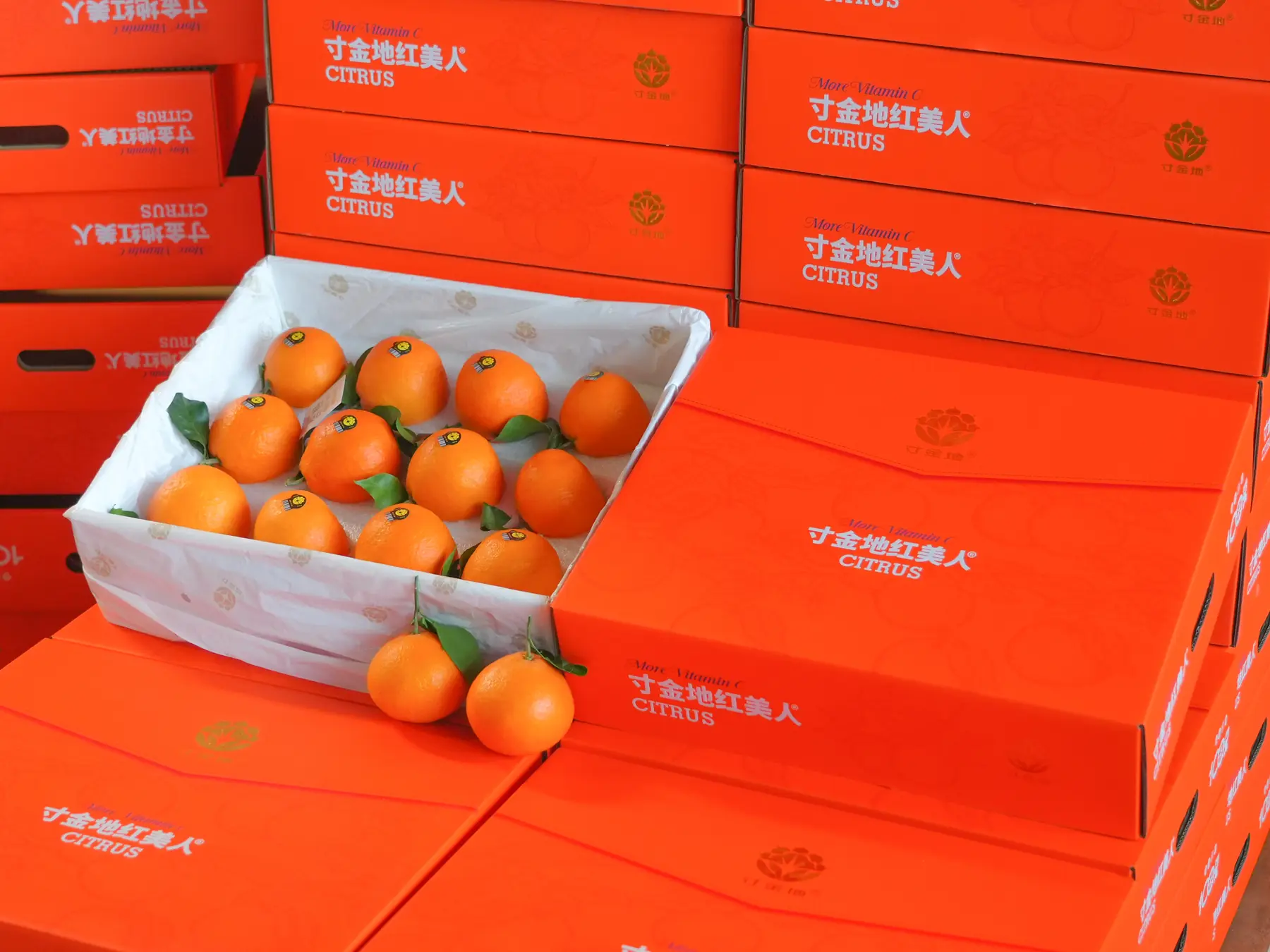
Specify the net weight of the box and what the box is made of. Specify how each fruit is protected inside it — foam net sleeves are ordinary commercial practice for pomegranate, and individual wrapping is ordinary for stored fruit, but ordinary is not the same as agreed.
Specify how the boxes are arranged: how many go on a pallet, how the pallets are secured, how many pallets fill the unit you are buying, and whether the pallets are heat-treated to the international wood packaging standard. If your market requires a particular pallet footprint, say so — changing it after the boxes are printed is expensive.
Specify the labelling. Language, the name of the variety, the origin, the weight, any lot or traceability marking, and any mark your own customer requires. Labelling is one of the three things assessed on every consignment in most importing regimes, and it is the one most often left to the exporter to guess.
Why packing is really a pest and residue question
The reason to be exact about all of this is not tidiness. Consignments are turned back for what is found inside the box.
The cited Russian regulator records include a Chinese plum consignment returned in 2025 after Monilinia fructicola was detected, part of a stone-fruit consignment destroyed in 2026 after live Grapholita molesta larvae were found, and a separate case in which fruit carrying scale insects was released. These are outcomes of individual historical cases. They do not establish that every fungal or insect finding has the same outcome, or that surface pests are generally acceptable.
The cited Chinese export-fruit rules include rectification and suspension of acceptance of export filings in specified circumstances involving quarantine pests or residue findings. The actual response, scope and duration depend on the applicable rules and authority decision; the records do not establish an automatic end to the supplier’s season. Ask how the supplier prepares for the inspection requirements applicable to your order.
So ask two more questions. What proportion of each consignment is sampled before packing and how many fruit are cut open, and what the supplier does with a lot that fails.
Commercial fields, stated as questions rather than assumed
Name the delivery term you work on, in the three-letter form your bank and your forwarder use, and name the place that goes with it — a term without a named place is not a term. Say where you want the goods handed over and by whom, rather than assuming the departure point.
Review our default payment arrangements on the Contact page (/contact/#payment). If you propose different percentages or timing, explain the reasons and order context. Our team brings proposed changes to the business owner for discussion before agreeing any exception.
State the smallest quantity worth quoting for you and the largest you can take in the window, and ask what the supplier can actually hold in that window. Ask about samples: whether they can be sent, how, and who bears the cost.
Our default payment arrangements are published on the Contact page (/contact/#payment). Prices, available quantity, packing details and delivery arrangements are confirmed for the enquiry and order. A seasonal reference or brochure figure is not a reservation of stock or a quotation.
Using the enquiry form on this site
The enquiry form has fields for fruit, destination, quantity, preferred timing and packing. Add your preferred delivery term with its named place, testing or inspection requirements and other conditions in the notes. The team reviews these details to prepare an appropriate response; missing details can be clarified during the enquiry.