Knowledge
Chinese citrus export calendar: Chunjian, Ehime No.38 and when to book
For buyers planning a Chinese citrus programme: what Chunjian and Ehime No.38 are, their reference seasons, and the fruit and destination details to discuss before booking.
Why the calendar decides the deal
Chinese easy-peeler citrus is not one product with one season. The lines an exporter offers are distinct varieties with distinct windows, and the difference between them is the difference between fruit that is at its best and fruit that is merely available. Because the fruit is bought by taste at the far end, arriving two weeks early with a variety that has not finished colouring is a commercial problem, not a logistical one.
This page sets out the two Sichuan lines most often offered to overseas buyers, with the published figures for each. Everything numeric below is rendered from the fact file this site is built from, and each figure is typical for the variety rather than a guarantee for a particular lot — a distinction the footnote under every table on this site repeats for the same reason.
Chunjian, the winter easy-peeler
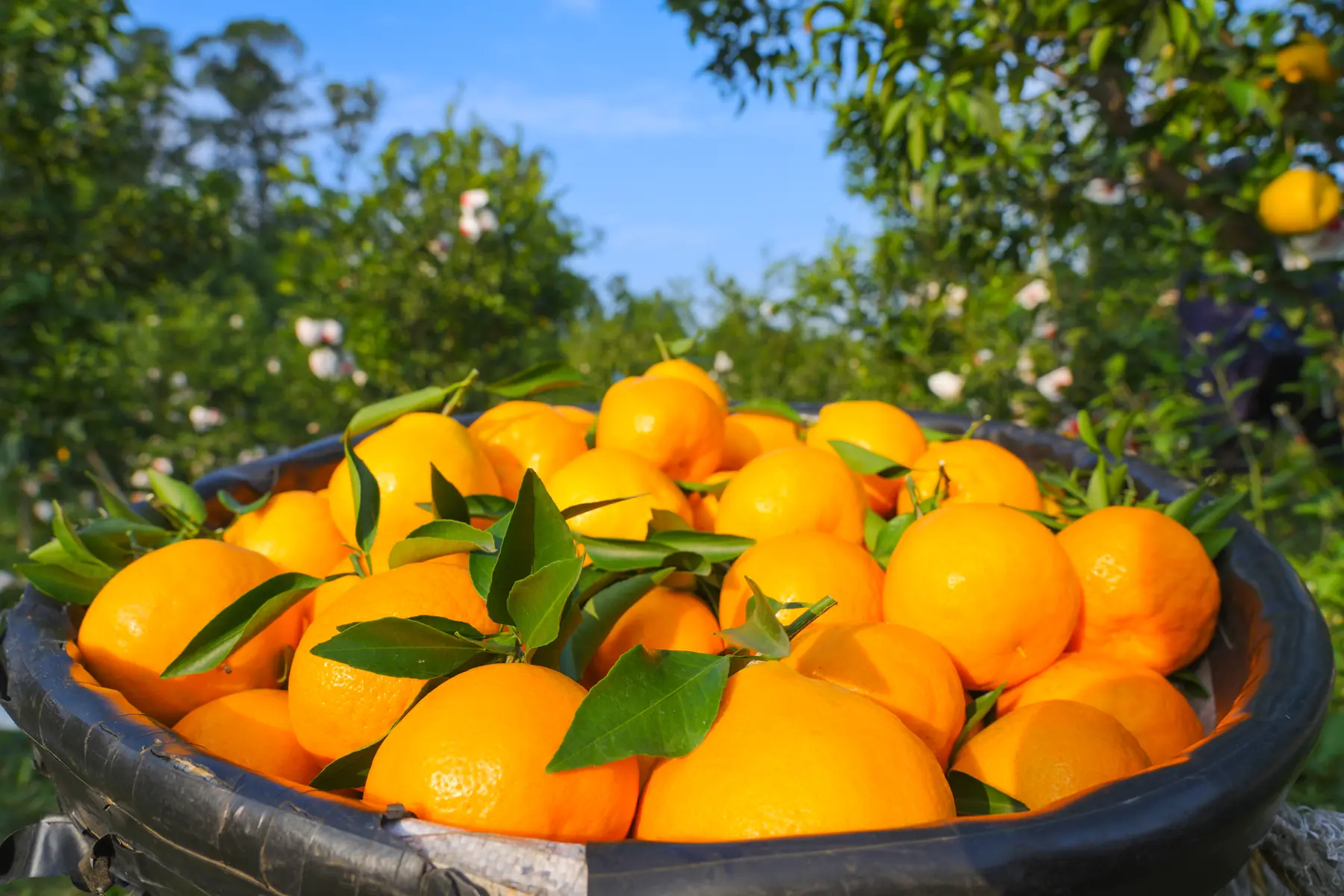
Chunjian is a hybrid citrus variety grown widely in the Sichuan hill country, and in the Chinese domestic trade it is usually sold under a colloquial nickname rather than under its variety name. It is an easy-peeling, juicy, low-fibre fruit, and the sweetness that makes it worth exporting comes from the day-to-night temperature swing in the hills where it is grown.
The published Brix range is a variety reference, not a reading for every lot or a promise tied to a particular point in the season. Maturity, taste and appearance should be checked against the actual fruit offered. Ask for current lot information and discuss samples where available; confirm price for the requirements and timing of your enquiry.
The window, the peak and the published figures for the line are in the table below.
Ehime No.38, the jelly orange
Ehime No.38 is a Japanese-bred variety grown in China mainly around Meishan and Danling in Sichuan, and it is sold as the jelly orange because of its texture: the flesh breaks down completely, with very low acidity, and the fruit is eaten by sucking rather than chewing. That texture is the whole selling proposition, and it is also the whole risk — it is a soft fruit and it does not forgive rough handling.
The colour break begins in the middle of September, full colour arrives at the beginning of November, and the fruit is fully ripe at the start of December. Public reporting puts the best flavour in the last third of November and the first days of December, which is exactly where the peak in the table below falls. A buyer offered Ehime No.38 in early October is being offered fruit that has coloured but not finished, and should say so in the enquiry rather than discovering it on arrival.
This is one of the two lines on this site that is bought in from named districts rather than grown on the group’s own ground, and the line page says so in as many words.
How the two windows sit against each other
Read the two tables together and the shape of a Chinese citrus programme appears. Ehime No.38 opens in the autumn and finishes as the year turns. Chunjian opens as Ehime is finishing and carries through to spring. Between them they cover roughly half the year with two products that taste nothing like each other, which is why importers who work with one usually end up working with both.
The overlap month is where the interesting decision sits. In that month a buyer can take the end of one variety or the beginning of the other, and the two are not equivalent: the tail of a variety is fruit that has been on the tree longest, and the head of a variety is fruit that is still improving. Ask which one you are being offered.
Booking: the part that has to start early
Two clocks run against a citrus programme, and only one of them is about fruit.
The first is the destination and registration check. The cited Chinese rules and historical destination sources describe requirements that depend on the fruit and market. Confirm the current requirements for the exact variety, origin, orchard and packhouse with the responsible authorities before agreeing a shipment. Previous trade or a seasonal calendar is not approval for a new order.
The second is the picking and packing schedule. Share the volume, packing format and preferred window early so the team can assess the request. Actual availability and booking lead time depend on the crop, destination requirements and order; a seasonal calendar does not reserve stock.
There is a third thing worth doing that costs nothing: name a published storage code of practice in your enquiry. The Chinese Ministry of Agriculture and Rural Affairs publishes an operating procedure for the storage and preservation of citrus, and asking a supplier to quote against a named public document is a far better test of their operation than asking whether they have a cold chain.
What to put in the enquiry
Name the variety, destination, quantity and preferred month, and explain your priorities for flavour, size, appearance and packing. The enquiry form has fields for these core buying details. Add a preferred delivery term with its named place, testing needs and any other conditions in the notes. The packing article provides further questions to discuss.