Knowledge
Yunnan blueberry exporter: season, size and the buying brief
Yunnan is one of China's main blueberry regions. This guide explains the December–May reference window, the size and punnet questions that make a blueberry offer comparable, and the checks a buyer should make when the line is sourced rather than own-grown.
Why Yunnan, and why the district matters
Yunnan sits in south-west China, with a high-altitude, mild climate that supports blueberry production outside the main northern season. For a buyer, the province name is only the start: the growing district, the variety and the harvest date determine the fruit size, firmness and flavour.
Cunjindi's blueberry line is sourced from Yunnan, not grown on group-owned ground. The growing district is named for each lot, and the exact origin is confirmed in writing. A buyer should ask for the district and the packhouse, not just 'Yunnan blueberry'.
The province is also not one specification. Altitude, variety and the harvest week change the fruit size, the firmness and the flavour, so two offers that both say 'Yunnan blueberry' can be different products. Ask for the district, the variety and the harvest week in writing, and compare those before comparing the price.
The December–May window
The published reference window is December to May, with the main volume from January to April. That window is a planning aid, not a stock list. A specific week can be early or late depending on the district, the variety and the weather.
For a summer retail programme, start with the target arrival month and the punnet format, then work back to the harvest and shipment window. If the answer is 'we will see', the brief is not ready.
Size, punnet and the two-column brief
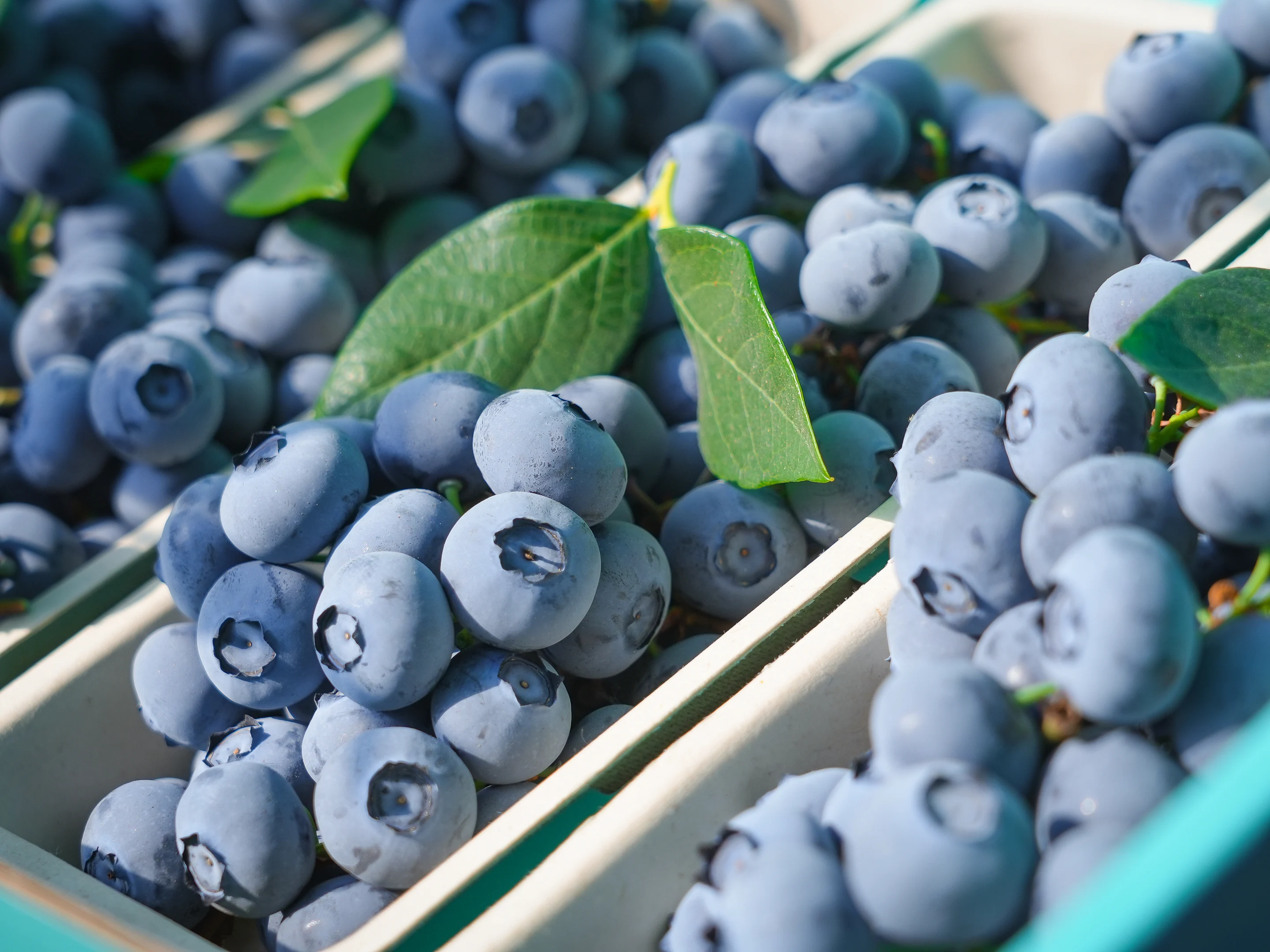
Blueberry offers are often compared on price per kilogram while the fruit size and punnet format differ. That comparison is not like for like. Put the size range and the pack format in separate columns, and ask for the count per punnet and the net weight per carton.
A good brief states the acceptable size range, the punnet format, the carton configuration, the label requirements and the arrival month. If the buyer has a retailer specification, attach it. The packhouse can then confirm what it can actually pack, rather than quoting a generic line.
Sourced line: what the exporter can and cannot promise
A sourced line means the exporter buys from named growers rather than harvesting from its own orchards. The exporter can coordinate the pack, the documents and the shipment, but the growing district and the grower can change between lots.
That is not a defect; it is a different supply model. The buyer should ask which district and which grower are proposed for the lot, what the actual harvest date is, and whether the same programme can be repeated. A trial is the right way to test consistency before a weekly programme.
Cold chain and arrival condition
Blueberries are sensitive to temperature, time and handling. Pre-cooling, transit temperature and the receiving-point handover should be agreed before the container is booked. The same fruit can arrive in different condition on a short regional route and a long deep-sea route.
Ask the exporter what pre-cooling is used, what temperature is maintained, and where the cold-chain responsibility passes to the importer. Put the answer in the RFQ, not in a post-arrival discussion.
What to confirm before the first order
Confirm the district and grower, the variety, the size range, the punnet and carton format, the quantity, the destination port, the target arrival month and the Incoterm. Confirm the exporter's China Customs registration and the documents the destination requires.
Cunjindi publishes its China Customs registration (5101960CJJ) and its ISO 22000 certificate. GLOBALG.A.P. is held on the citrus line, not on the blueberry line; do not assume that citrus coverage applies to blueberries. A trial quantity is a sensible way to test grade, pack and arrival condition before a larger programme.
A trial before a weekly programme
A blueberry programme is usually a weekly commitment, and a weekly commitment is hard to fix from a single sample. Use a trial shipment to test the size range, the punnet, the arrival condition and the document flow. Record the results against the brief, including the percentage of soft or damaged fruit the buyer will accept.
The trial should be large enough to be meaningful and small enough to be recoverable. If it meets the brief, the next order can be planned with a real baseline. If it does not, the buyer has learned something before a full container is at risk. A trial is not a promise of allocation; it is a test with a written result.
Ask for the actual harvest date and the pack date on the carton, not just the shipment date; the gap between them is part of the arrival condition and the storage life the buyer can plan for.