Start with what the number means
Brix is a measure of soluble solids in fruit juice. In pomegranate buying, it can provide a useful indication of sweetness, but it should not be treated as a complete judgement of flavour or shipment quality. Acidity, maturity and fruit-to-fruit variation can all influence how the fruit tastes.
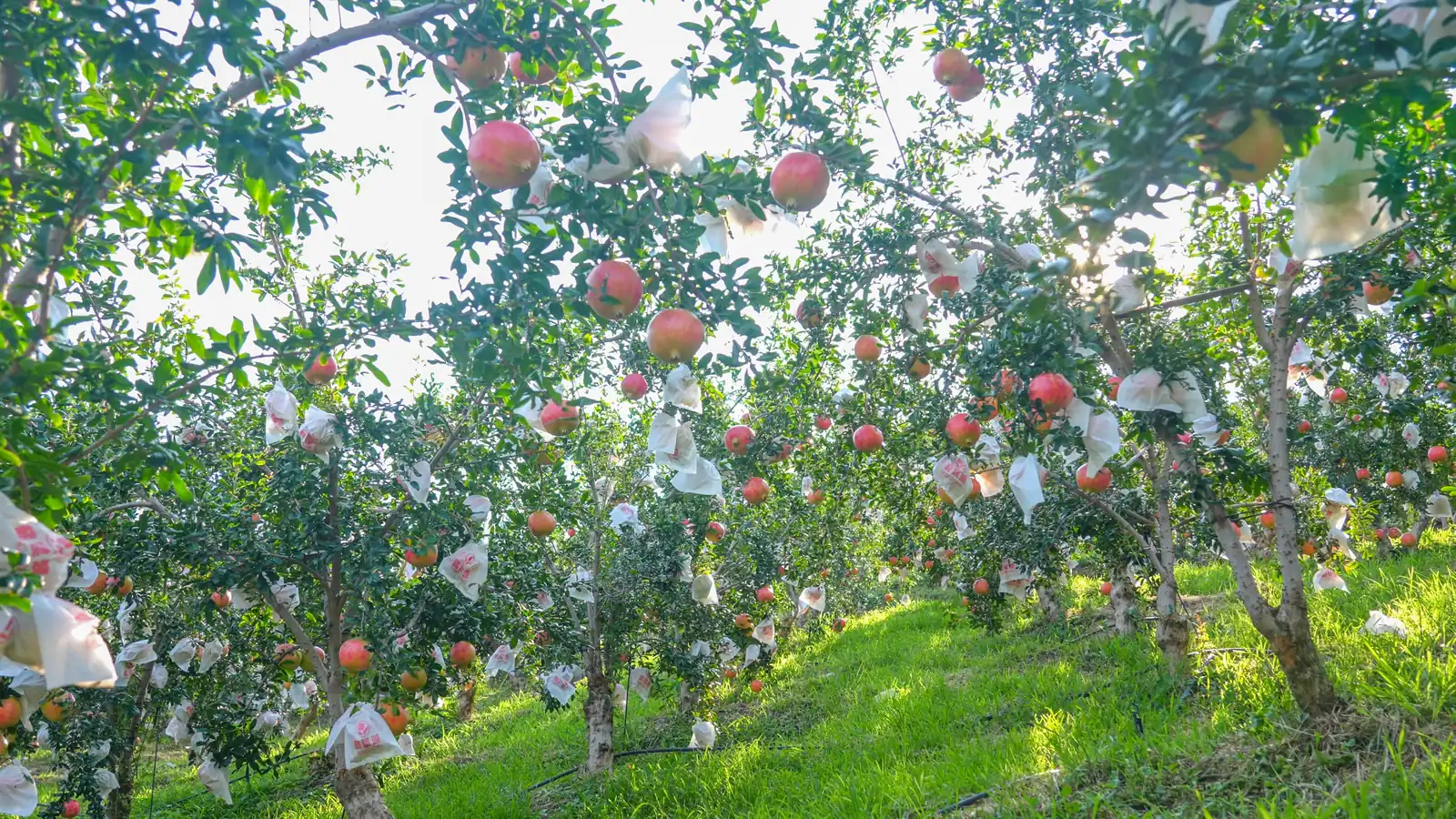
The recorded origin for Cunjindi soft-seed pomegranate is Huili, Sichuan, China, and the supplier-confirmed supply season is August to November. On 20 September 2026, Huili soft-seeded pomegranate samples averaged 18.35°Brix, with a range of 18.2–18.5°. Sweet-tart pomegranate samples tested on the same date averaged 19.28°Brix, with a range of 18.9–19.8°.
These figures describe the samples tested on that date. They should not be read as a permanent specification for every pomegranate offered from the same origin or during the same season.
Separate the sample from the shipment lot
These readings were not tied to an identified shipment lot and are not a minimum guarantee for an order. The product record also lists 16–18°Brix as a catalogue reference that must be confirmed for the lot.
The distinction matters when offers are compared. A dated sample result answers, “What did these particular fruits measure?” A commercial specification answers, “What result must the proposed lot meet, and how will that be checked?” Those are different questions even when the numbers look similar.
A buyer should therefore avoid rewriting the 18.35° or 19.28° sample averages as an automatic shipment minimum. An average also does not mean that every fruit produced the same result; the recorded ranges show variation within the samples.
Use two controls for a meaningful check
For a buying decision, keep two controls clear: the identity of the proposed lot and the agreed test protocol. Without both, two Brix figures may have been produced from different fruit selections or testing approaches and may not be directly comparable.
The following copyable block can be pasted into an RFQ or specification discussion:
Pomegranate type: [soft-seeded / sweet-tart]
Origin: Huili, Sichuan, China
Proposed lot identifier: [insert]
Test timing or stage: [insert]
Sampling method: [insert]
Number of fruits tested: [insert]
Instrument and temperature compensation: [insert]
Results required: [individual readings / average / range]
Requested acceptance rule: [insert]
Record to accompany the result: [insert]
The acceptance rule deserves particular attention. “Target average,” “minimum average” and “minimum for every tested fruit” are not interchangeable. Buyers should write the intended rule explicitly rather than relying on a single Brix number.
Put Brix in the enquiry, not in an assumption
A useful enquiry can state the desired taste profile, identify whether soft-seeded or sweet-tart fruit is required, and paste the proposed lot-check wording directly into the website text form. Current grade, packing and availability are confirmed for the enquiry, and our sales team reviews lot availability and terms case by case.
Send us your fruit type, destination, target quantity, packing preference, dates and Brix-check request through the website enquiry form. We can then discuss the proposed lot and applicable terms without turning a historical sample reading into an unsupported shipment promise.
Sources and further reading
Soft-seed Pomegranate
Prepare and submit a buying enquiry