
Start with the weight threshold, not the grade name
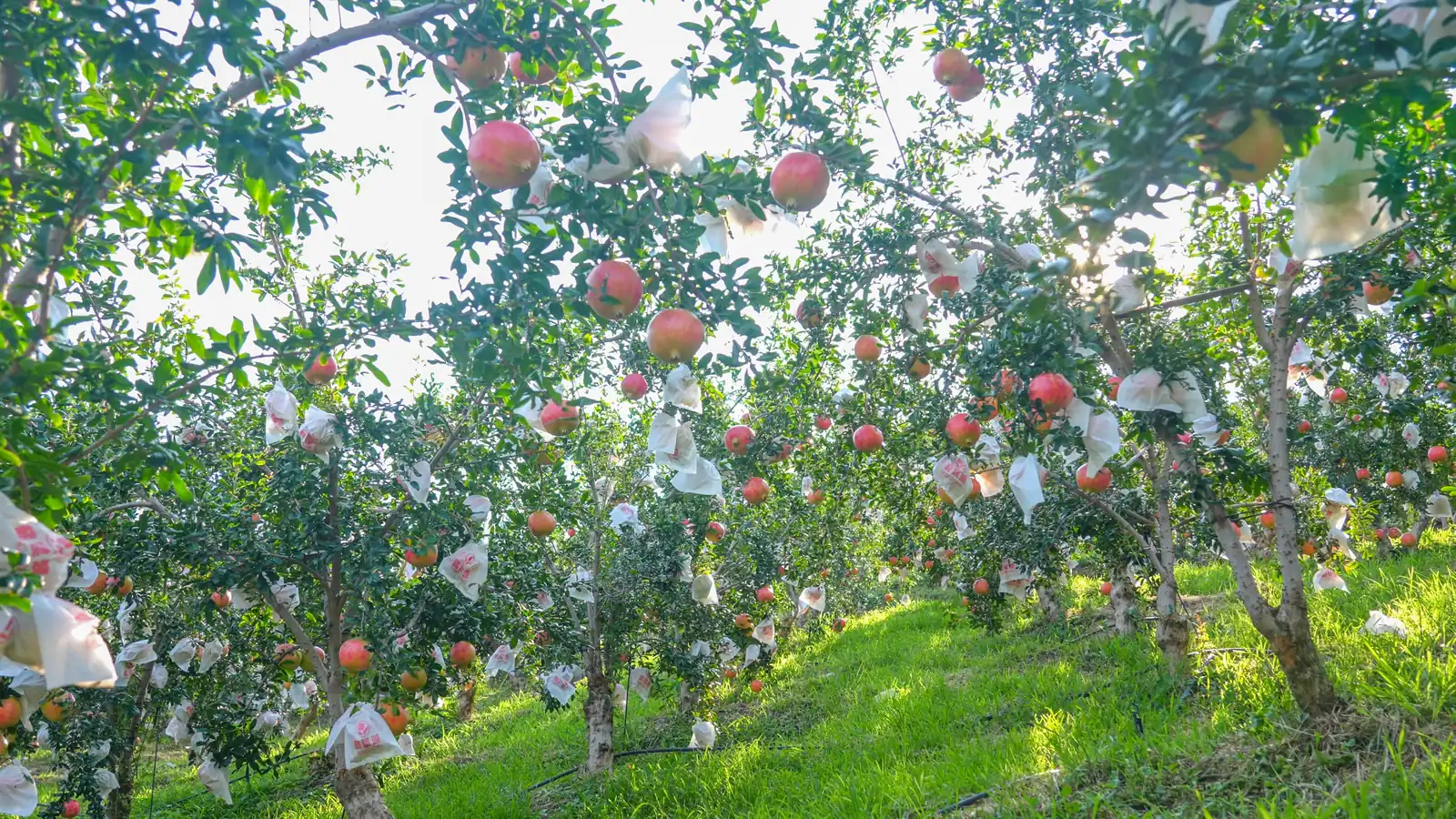
Our soft-seed pomegranate origin is Huili, Liangshan, Sichuan, China. The catalogue reference records two historical fruit-weight bands: 350–499 g as grade 1 and 500 g and over as top grade. These bands came from the CCTV-13 report dated 7 September 2025 and describe the reported season rather than a permanent specification for every lot.
Under that reference, a fruit weighing 499 g belongs in the 350–499 g band, while a fruit weighing exactly 500 g belongs in the 500 g-and-over band. The second band sets a minimum threshold but does not state an upper weight limit.
For an RFQ, the gram range is more useful than the grade name alone. Terms such as “grade 1” and “top grade” may be interpreted differently when buyers compare offers from several sources. Writing the numerical boundary removes that ambiguity.
Keep fruit weight separate from carton weight
A fruit-weight band and a carton specification answer different questions. “500 g and over” describes the required weight of each fruit. “5 kg carton” describes the intended pack format. One should not be used as a substitute for the other.
Fruit count per carton should also be treated separately. Even within the same permitted band, different combinations of fruit weights can produce different carton counts. If count matters to your retail programme, state both the fruit-weight requirement and the preferred count rather than trying to derive one from the other.
The approved standard packing references are 4 kg or 5 kg single-layer cartons measuring 400 × 300 mm, with a foam net on each fruit and a PE liner, or a 2 kg gift box.
Copy this weight-grade block into your RFQ
The following template keeps the threshold, tolerance and packing request visible as separate fields:
Product: Soft-seed pomegranate
Requested fruit-weight band: [350–499 g / 500 g and over / other stated range]
Boundary rule: [500 g must be included in the 500 g-and-over band]
Permitted tolerance: [none / buyer to specify / supplier to propose]
Preferred carton: [4 kg / 5 kg / 2 kg gift box / other preference]
Preferred fruit count per carton, if applicable: [state range]
Requested confirmation: [proposed lot grade, actual weight specification and packing]
Destination: [country, city or receiving point]
Target quantity and required dates: [insert buying requirement]
Treat the historical bands as reference language only: current grade, packing and availability are confirmed for the enquiry.
Compare replies using the same boundary
When reviewing offers, check whether every reply uses the same interpretation of 500 g. An offer described only as “top grade” is not yet directly comparable with one specifying “500 g and over.” Ask for the numerical fruit-weight specification to be restated alongside the proposed packing.
This approach helps purchasing teams compare the actual requirement rather than comparing labels. It also gives the supplier a clear basis for confirming the particular lot.
To discuss a pomegranate requirement, paste the completed fields into our website enquiry form, including your company, contact email, destination, target quantity, packing preference and dates. Our team will review the proposed lot and terms case by case.
Sources and further reading
Soft-seed Pomegranate
Grading shown in the company archive
Prepare and submit a buying enquiry