
Give each grading check a clear purpose
A grading discussion is most useful when the buyer separates what can be seen, what is found inside the fruit and what can be measured by weight. These checks address different commercial concerns and should not be compressed into a single request for “good grade.”
The company archive contains a CCTV-13 report dated 7 September 2025 showing appearance, internal-quality and weight checks on a pomegranate line. That footage is historical reporting rather than a current-lot inspection, so present specifications should identify the particular lot.
The first useful question is therefore not simply whether fruit is graded. Ask which result each check is intended to produce for the proposed order and how that result will be expressed in the specification.
Appearance: define what matters visually
An appearance request should tell the supplier which visible characteristics matter to the intended market. Depending on the programme, a buyer may need to discuss colour expectations, shape, skin marks or the level of visual uniformity required across a pack. These points should be described rather than left inside a broad grade name.
A practical question is: Which visible features will be used to separate or accept fruit for this lot? If appearance affects retail presentation, the enquiry can also state the proposed sales format and packing preference. This gives the supplier a clearer basis for discussing a workable specification instead of interpreting a general request such as “export quality.”
Internal quality: connect measurements to the lot
Internal quality cannot be established from an exterior photograph alone. A useful buyer question is: What internal-quality information can be agreed for the proposed lot, and how will it relate to the fruit being offered?
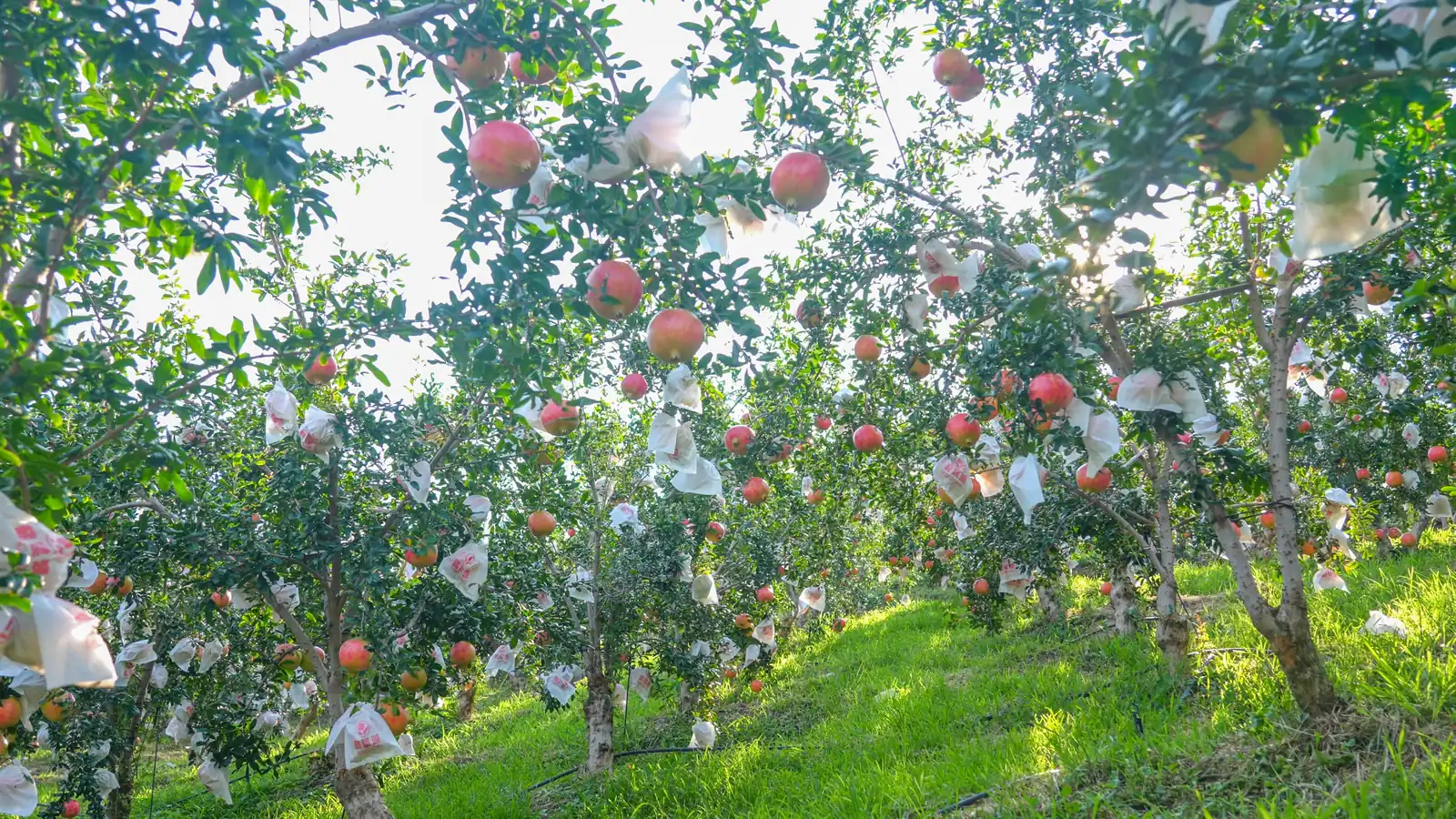
The approved product record identifies Huili, Liangshan, Sichuan, China as the origin of Cunjindi’s soft-seed pomegranate. Huili samples tested on 20 September 2026 averaged 18.35°Brix for soft-seeded pomegranates, with a range of 18.2–18.5°Brix, and 19.28°Brix for sweet-tart pomegranates, with a range of 18.9–19.8°Brix. Those readings are sample results, not results from an identified shipment lot or a minimum guarantee for an order.
Buyers should therefore use dated sample figures as context, then state what they need discussed for their own order. This keeps a reference measurement separate from the commercial specification that will govern the proposed fruit.
Weight: replace grade labels with numbers
Weight is easier to compare when the enquiry uses gram bands rather than relying only on terms such as grade 1 or top grade. The historical CCTV-13 reference described 350–499 g as grade 1 and 500 g and over as top grade for the reported season. Those labels are a historical reference, not a standing specification for a current lot.
Ask three connected points: the required fruit-weight band, any acceptable tolerance and the preferred packing format. This helps prevent a grade label from being interpreted differently by buyer and supplier, while also linking fruit size to the intended pack.
To discuss a pomegranate requirement, use the website enquiry form and include the fruit, destination, company, contact email, target quantity, packing preferences and dates. The sales team reviews lot availability and commercial terms case by case. Submit these details together with your three grading questions to start a focused buying conversation.
Sources and further reading
Grading shown in the company archive
Soft-seed Pomegranate
Prepare and submit a buying enquiry